
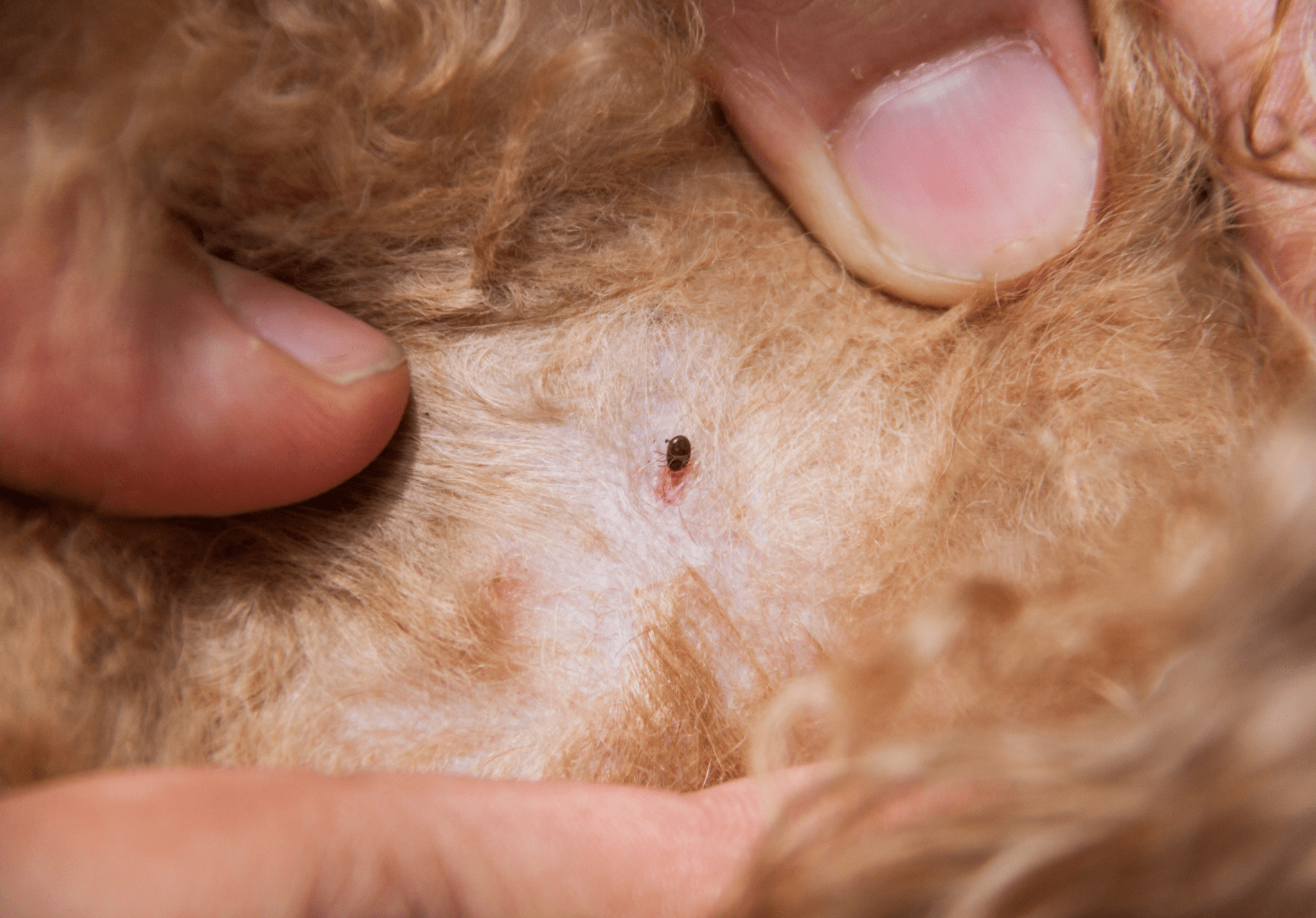
People often confuse fleas and ticks due to their small size and tendency to bite people and their pets. While these tiny, wingless parasites share these few similarities, they have quite a few differences between them. Here are some key facts about fleas and ticks, and how you can tell them apart:
Appearance
The first way to tell fleas and ticks apart is by their appearance. Fleas are usually about 1/8 inch in size and reddish brown in color. Their tiny, narrow bodies and jumping power make it easy for them to efficiently travel through pet fur.
Ticks range from 1/16 inch to 1/14 inch, depending on the species and if they’ve recently fed. After ticks eat, they swell up, making them appear a bit larger. Ticks are arachnids that have flat, oval-shaped bodies and eight legs. Instead of jumping to travel from host to host like fleas do, ticks crawl.
Bites
Both of these creatures bite, although they go about it a bit differently. Flea bites are usually seen in clusters or straight lines around the waist, lower legs, ankles and feet. These bites appear as small, raised red bumps and can be quite uncomfortable. Itching, swelling and crusty, blister-like openings are all symptoms of flea bites.
On the other hand, tick bites are usually painless, which makes these parasites especially difficult to detect. Ticks attach to a host and feed on it until they become full, then they detach and fall off. Symptoms of tick bites sometimes aren’t apparent until days later. These symptoms include:
- Swelling and rashes
- Headaches
- Sore muscles and joint pain
- Fever
Health Risks
Flea bites are generally considered less of a health risk than tick bites. While flea bites may lead to allergic reactions and bacterial infections, ticks are known to carry diseases, like Lyme disease and Rocky Mountain spotted fever. Fleas can also carry diseases, but it’s much rarer. If you notice symptoms like an intense headache, trouble breathing, fever or fatigue after a tick bite, seek immediate medical attention.
Where They’re Found
Both fleas and ticks enjoy damp, grassy and overgrown areas outside, but you’re much more likely to spot fleas inside than ticks. Fleas are often found in carpets, upholstered furniture, pet beds and baseboards. If ticks are brought inside by a host, they’re either found on the host, such as someone’s pet, or in small cracks and crevices around the home after they’ve fallen off the host.
Prevention Tips
To prevent fleas and ticks from making themselves comfortable in and around your home, you should:
- Vacuum daily
- Wash pet beds and rugs regularly
- Keep your lawn well-manicured
- Regularly bathe pets
- Wear protective clothing outdoors
What to Do If You Find Them in Your Home
If you notice fleas or ticks in your home or on your pets, it’s time to call a professional pest control company, as you may be dealing with an infestation. Although DIY preventative measures can help, professional pest control is the only truly effective way of getting rid of them and preventing them from returning in the future.
Protect your home, your pets and your family from fleas and ticks by reaching out to Pro-Staff, your trusted Des Moines pest control home team. Call us at (515) 279-7378 or contact us online for a free quote.
