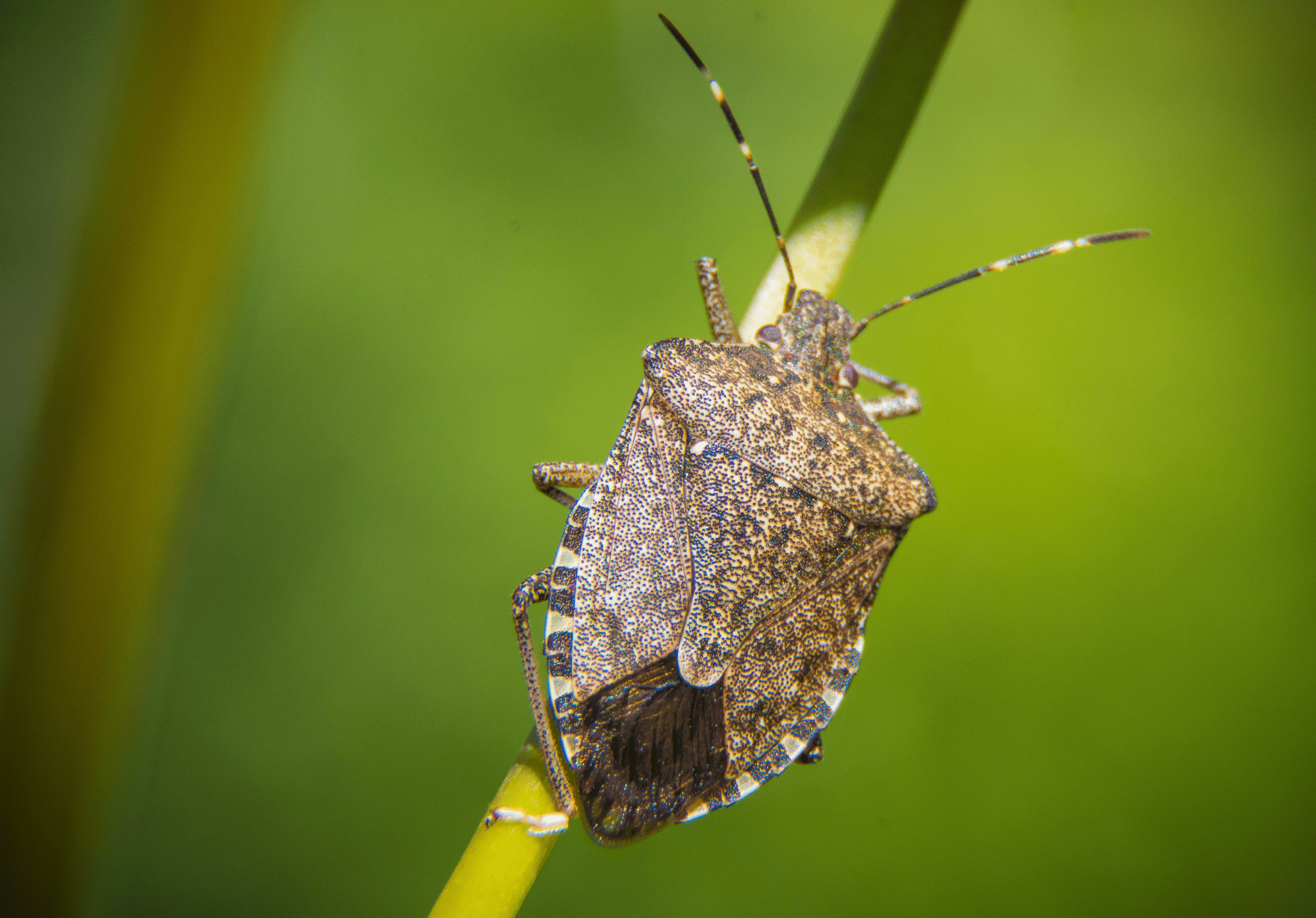
Due to their unpleasant odor when they’re crushed, stink bugs are not a fun insect to come into contact with. It’s especially uncomfortable when you find them in your home. Even though they’re common problems for homeowners in the winter, they can also become quite a nuisance during the warmer months as they search for dark, damp places to escape the heat. While they pose no threat to your health or home, some species are invasive, threatening local ecosystems, and they can certainly be annoying to have around. Here are five ways to protect your home against stink bugs:
Make Sure You’re Not Attracting Them
Effective prevention begins with minimizing attractants. Stink bugs are known as phototropic insects, meaning they’re attracted to light. Exterior lights or even light from windows can attract stink bugs to your home, so minimize these light sources.
Stink bugs feed on fruit, vegetables and other vegetation, particularly overripe or decaying vegetation, making these major attractants. Keep your yard and garden well-maintained, and be sure to pick up and dispose of any overripe fruits and vegetables and other decaying plants.
Like most pests, stink bugs appreciate damp, moist environments. Since they’re often seeking shelter, whether that’s to overwinter or to escape the heat during the summer, make sure your home isn’t one they’ll want to choose. Limit the moisture levels in your home by fixing leaks, ensuring proper ventilation and using dehumidifiers.
Try Repellents
While DIY repellents aren’t always the most effective solutions, they can help prevent stink bugs. Make spray repellents by mixing essential oils, like peppermint and lemon grass, and water, and spray them around your home. You can deter stink bugs from feeding on plants by making a garlic and water solution and spraying it on the leaves. You can also try planting lavender, garlic, catnip or marigolds in your yard to use as natural repellents. Their strong aromas are unpleasant for stink bugs, and they’ll usually avoid them.
Seal Entry Points
To prevent stink bugs from getting inside your home, it’s important to seal entry points. Take a walk around your home and identify small holes and cracks where stink bugs could enter. This includes gaps or openings around windows, doors, foundations, utility pipes and vents. Seal these points with caulk or by installing weather stripping or mesh. Like most other pests, stink bugs need a very small amount of space to enter your home, so even the tiniest of openings need to be sealed.
Bust Out the Vacuum
If you see a stink bug in your home, resist the urge to crush it. When they’re crushed, they release a foul odor, hence the name. The odor is caused by a chemical released to protect themselves from predators. Even though the chemical is non-toxic, the smell is very disturbing. If you crush a stink bug, the smell could linger for days and potentially attract other stink bugs. So, it’s best to avoid crushing them and suck them up with a vacuum instead.
Call the Pros
Even though DIY remedies and preventative measures are helpful for protecting your home against stink bugs, nothing is as effective as professional pest control. Professional technicians have the tools, pesticides and knowledge needed to effectively prevent stink bugs from invading your home. Likewise, they can remove them by using targeted treatments if an infestation has already been established, and help you protect your home against future invasions through expert exclusion techniques.
If you run into a stink bug problem in your home despite your best efforts, give the expert team at Pro-Staff a call at (515) 279-7378 or request a free quote.