If you’ve noticed large, slow-moving flies gathering in the corners of your home or your porch, you’re probably dealing with cluster flies. Unlike house flies, cluster flies don’t present any risks to your health, but they’re certainly a nuisance due to their tendency to infest in exorbitant numbers. Here’s everything you need to know about cluster flies, including how to prevent and get rid of them:
What are Cluster Flies?
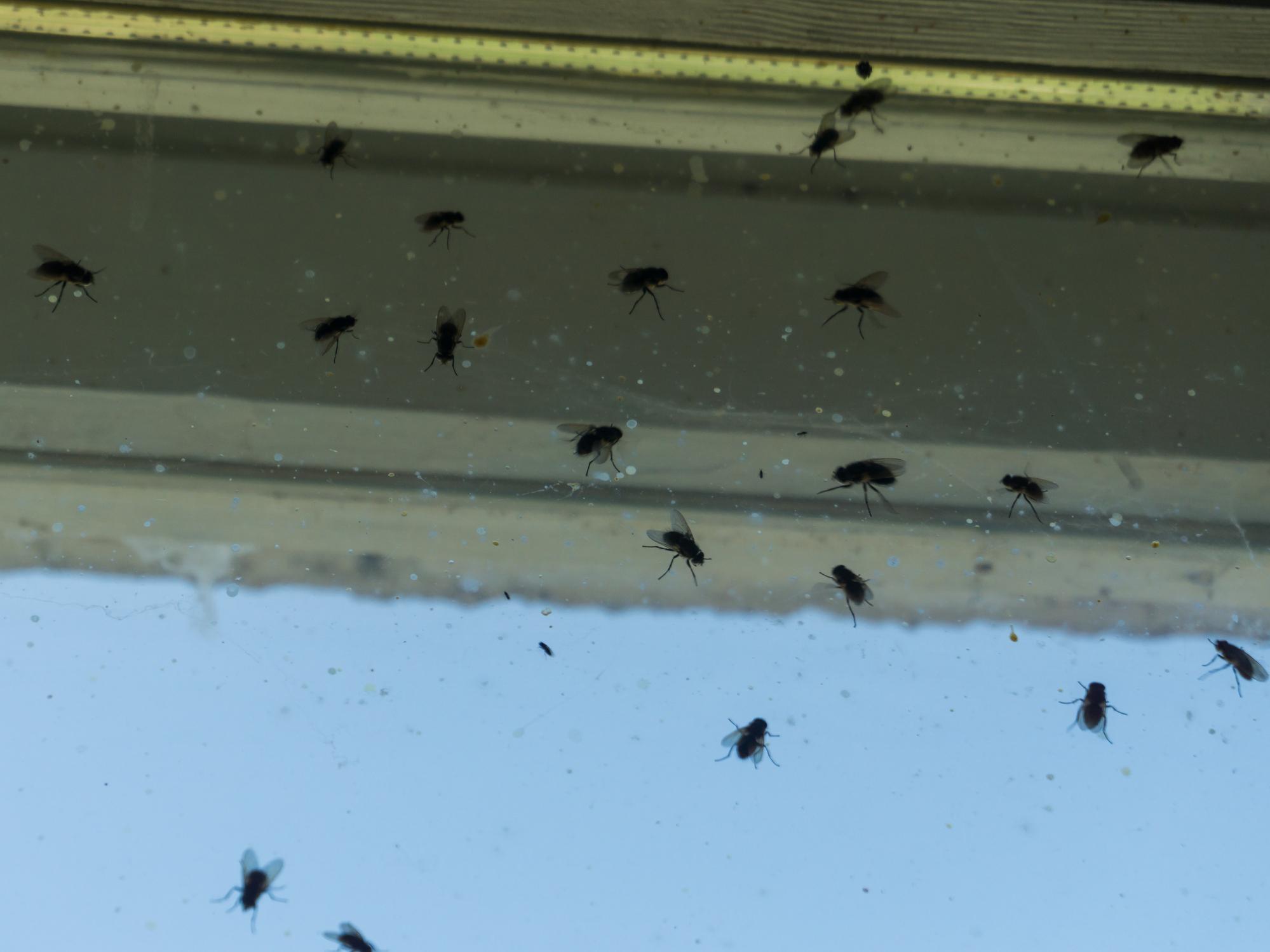
Cluster flies are large flies, measuring between eight and ten millimeters long. They’re dark gray in color with yellow on their thorax and checkered markings on their bellies. They have a fuzzy appearance, and their wings overlap when they’re at rest. Unlike many other species of flies, cluster flies aren’t drawn to food or garbage. Instead, they’re drawn to shelter. That’s why you’ll often see them in attics, wall voids, around windows and on sunny walls. As larvae, they feed on earthworms, and as adults, they feed on fruit, sap and nectar.
What’s the Difference Between Cluster Flies and House Flies?
It can be easy to confuse cluster flies with common house flies, but there are a few key differences. First, cluster flies are larger and duller in color, and they have fuzzier bodies. House flies, on the other hand, are smaller and have a shinier appearance.
The easiest way to tell the difference is in how they fly. Cluster flies fly much more slowly and sluggishly than house flies, which have a faster, more erratic flight pattern. Cluster flies are also known to gather and linger in one spot, whereas house flies are much more active and tend to dart around to different areas.
Another big difference between these two fly species is the problems they present to homeowners. While house flies can spread diseases and contaminate food, cluster flies pose no health risks to people or pets. Instead, they infest in large numbers, making controlling an infestation extremely difficult. This is why cluster flies are considered a nuisance pest.
Why Do Cluster Fly Infestations Happen?
Instead of being attracted to food sources, like garbage or spills, cluster flies are an overwintering pest that invade people’s homes in search of warmth and shelter. They enter through small cracks and gaps around windows, doors, vents or other openings. Once inside, they gather in large numbers—hence their name—in undisturbed areas like attics and wall voids. They typically hang out in people’s homes through the winter, reemerging in spring.
What Should You Do if You Find Cluster Flies in Your Home?
Due to their size and numbers, finding cluster flies in your home can be alarming. Luckily, cluster flies don’t reproduce indoors. They lay their eggs in rich soil outdoors, and their larvae remain in the soil, feeding on earthworms, until they’re fully developed. So you don’t have to worry about them reproducing in your home, but an infestation can still quickly get out of hand if left unchecked. Certain DIY methods, like vacuuming them up, may provide a temporary solution, but professional pest control is the only way to address the root of the problem.
What Can Be Done to Prevent Cluster Fly Infestations?
Preventing a cluster fly infestation relies mainly on exclusion, which means keeping them out in the first place. One of the primary ways of doing this is by closing off entry points. This includes:
- Sealing cracks around windows, doors, pipes and the foundation
- Ensuring screens are in good shape with no tears
- Installing door sweeps and other weatherstripping
- Covering vents with mesh
It’s also worth doing some yard cleanup, removing waste, wood piles and other debris that attract earthworms, which are their larvae’s food sources. Beyond these simple steps, true prevention comes from having a professional pest control team on your side that can catch potential problems before they become full-blown infestations.
Seeing cluster flies in your home? Call Pro-Staff, the pest control pros in Omaha, at (402) 819-7378 or contact us online for help.