Mites are some of the most commonly overlooked pests, and there’s a good reason for it. Mites are so tiny that you often can’t see them with the naked eye. These arachnids are closely related to spiders and ticks, and while some species are harmless, others can cause real problems for your plants, your home, and your family and pets. Read on for a breakdown of some common mite species and what you should know about each one.
Clover Mites
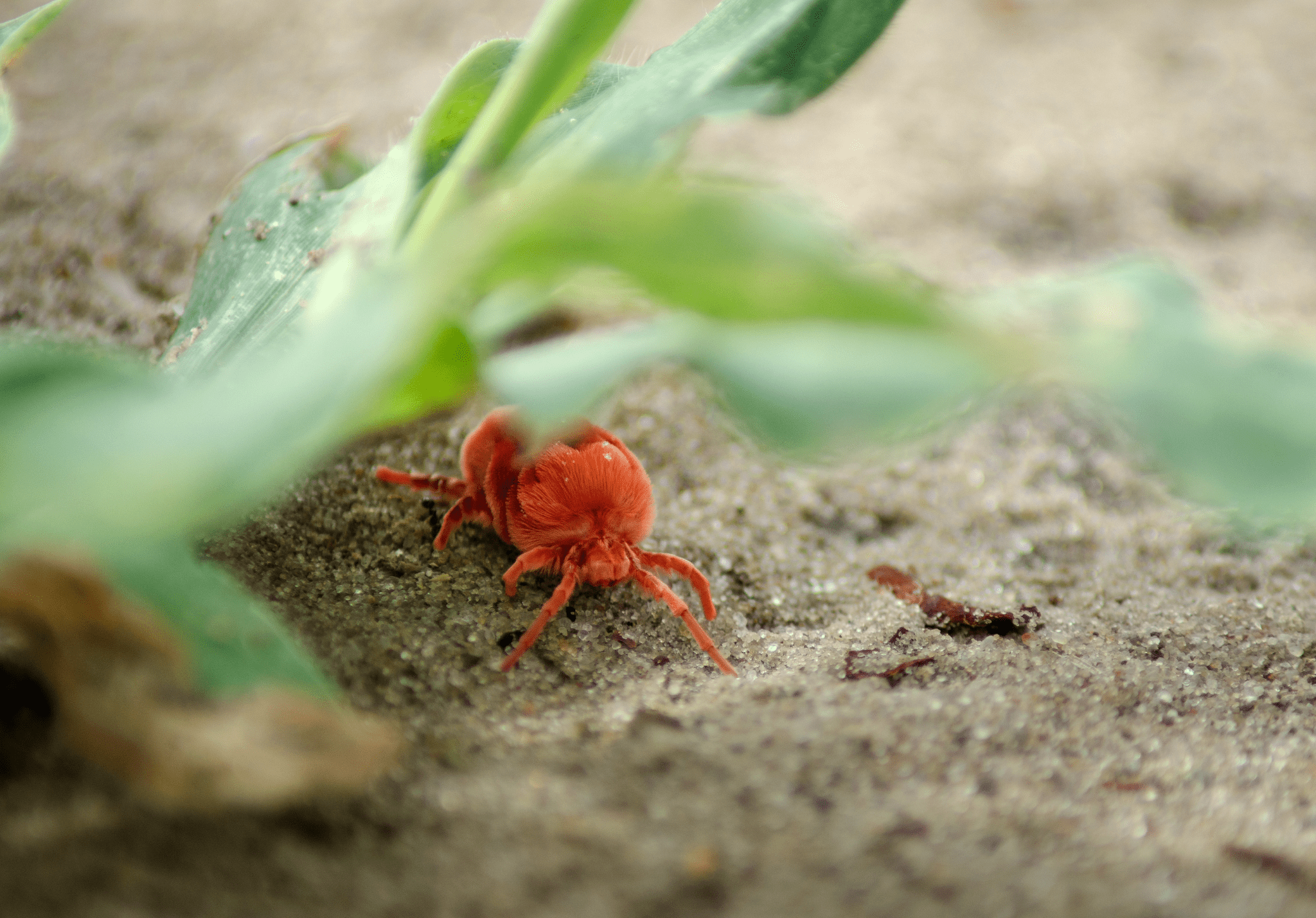
Clover mites are tiny, bright red mites that measure about 1/30 of an inch. Their two front legs are significantly longer than the rest of their legs and are often mistaken for antennae. They feed on grass, clover and other plants. Their feeding behaviors aren’t normally a huge problem for people’s gardens unless the infestation is extensive.
During spring and summer, clover mites prefer to stay outdoors, often found on sunny exterior walls. When the temperatures drop, they wander indoors to keep warm. They don’t bite, but they do leave a reddish stain when crushed, which can be quite a nuisance for homeowners.
Chiggers
Chiggers are tiny mite larvae, measuring close to 1/60 of an inch. They’re so small that you can’t see them unless they’re in a large cluster with other chiggers. They’re often found in overgrown vegetation or damp grassy, wooded areas. Most people find that chiggers are more of a problem during the warmer months.
While chiggers don’t present serious threats to your health since they don’t carry diseases, they do bite, and these bites can be pretty painful. They don’t sink into the skin, like many people think. Instead, they inject a digestive enzyme, which is the cause of the itchy red, welt-like bites. If you spend a lot of time outside in overgrown grass or weeds, it’s worth wearing long pants and insect repellent to prevent chiggers from hopping onto you for their next meal.
Spider Mites
Spider mites are tiny mites, about the size of a grain of sand, that can range from reddish-brown to yellowish-green in color, and they’re a gardener’s worst nightmare. These near-invisible pests feed on plants from the underside of leaves, causing severe damage or completely killing them. Signs of spider mites in your garden include webbing beneath leaves, discoloration or tiny dots on the tops of leaves, or brown foliage that dies and falls off.
The reason spider mites are such a huge threat to plants is because they eat chlorophyll, which is responsible for driving photosynthesis, the very process plants need to survive. Unhealthy plants are much more susceptible to spider mite infestations. Spider mites aren’t big fans of moisture, and they tend to prefer hot and dry environments, so proper watering is essential to protecting your plants.
Bird Mites and Rodent Mites
Bird mites and rodent mites are similar in size and nature, as they’re both tiny, parasitic mites that feed on the blood of their hosts. Unlike the mites discussed above, both bird mites and rodent mites can be seen with the naked eye, but it’s usually when they’re in motion. You’ve probably already guessed that bird mites and rodent mites are found anywhere there are birds or rodents.
As their names suggest, bird mites’ hosts are birds, while rodent mites’ hosts are rodents. The problem for homeowners comes in when those hosts die. These mites travel indoors to find a new host, which often ends up being people or pets. If you have a bird’s nest near your home or a rodent problem and you notice mysterious bites, these mites could be the culprit.
Flour Mites
Flour mites, also known as grain mites, are microscopic pantry pests that infest dry goods like flour, cereal, grains and pet food. They thrive in warm, humid conditions. They’re too small to see with the naked eye, but the appearance of fine moving dust on pantry items indicates their presence.
Flour mites reproduce rapidly, making an infestation difficult to get rid of. They’re not known for being especially harmful to humans, but infested food can spoil faster, lose nutritional value or taste bitter. Ingesting infested food can also cause allergic reactions in some people.
Mold Mites
Mold mites are microscopic and aren’t visible to the naked eye. The only way to notice them is in clusters, which appear as fine white, gray or brown “dust” or “frost” on surfaces. Mold mites are attracted to warm, humid environments that are poorly ventilated. They primarily feed on mold and fungi, and their presence is usually an indication of an underlying moisture problem in the home.
Mold mites are not parasitic and do not bite. The main issue health-wise is that their presence can cause airborne allergens that trigger allergic reactions. Mold mites have a rapid reproduction rate, and they’re usually found infesting bathrooms, basements, kitchens and utility closets.
Have a Mite Problem? Call the Pros at Pro-Staff!
Even if mites aren’t posing a huge threat, they’re still an unpleasant pest problem to have. If you’ve noticed these tiny invaders in your home, don’t hesitate to reach out to the Omaha pest control pros at Pro-Staff for help! Call (402) 819-7378 or contact us online today for a free quote.