
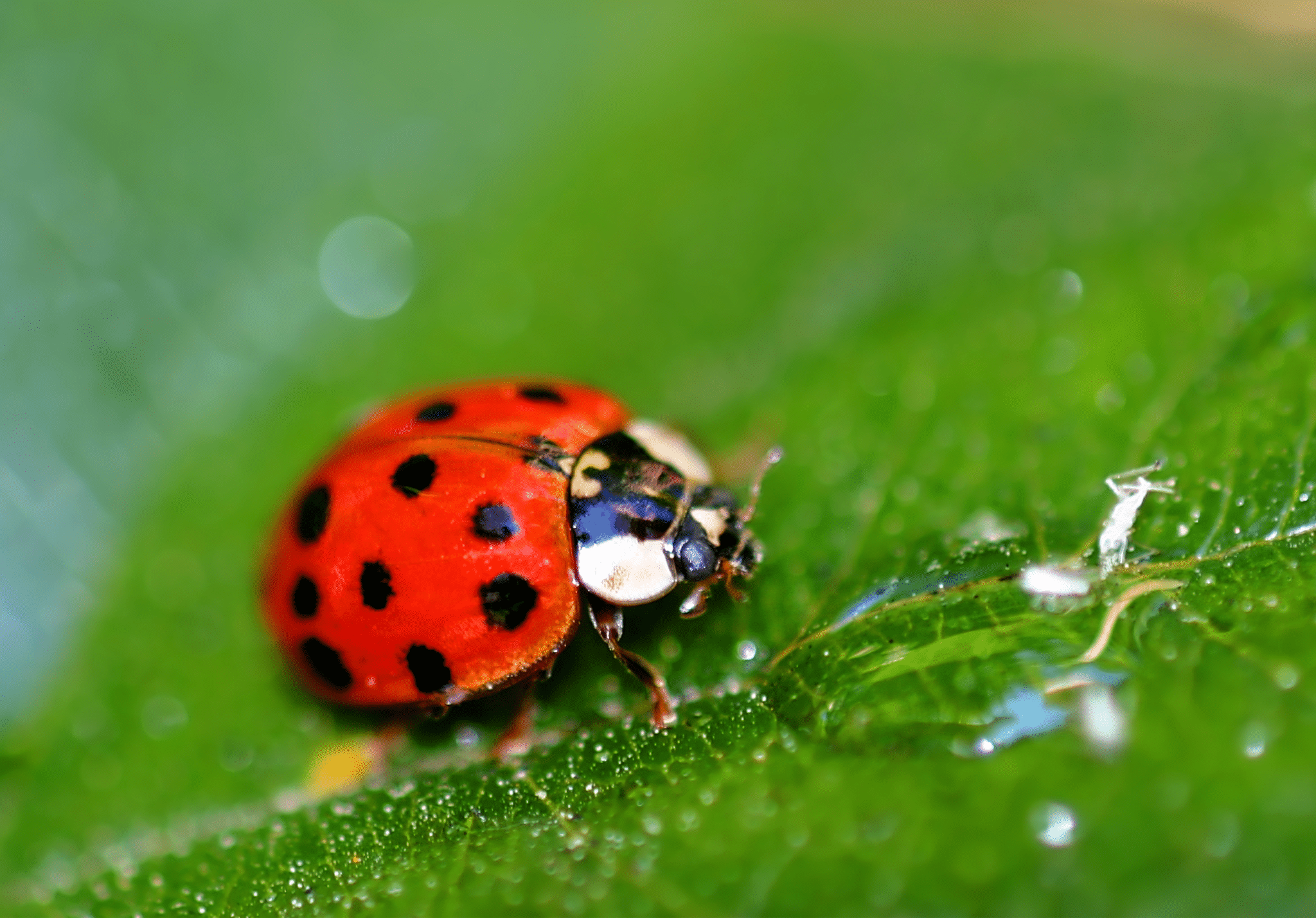
The cute little reddish-orange insects we often mistake for ladybugs aren’t actually ladybugs at all. They’re Asian lady beetles, and they have a striking resemblance to our native ladybugs, but the impact they have on our ecosystem is quite different. Read on to learn a little bit about Asian lady beetles and the threats they pose.
How Invasive Asian Lady Beetles Got Here
As their name suggests, Asian lady beetles are native to Asia. They were introduced to North America by the U.S. Department of Agriculture starting in the early 1900s. The idea was that these insects would help control pests that were threatening crops. However, this plan somewhat backfired, as Asian lady beetles are now an invasive species that pose several threats to the ecosystem.
The Upsides and Downsides in Gardens
With the invasion of Asian lady beetles, there are upsides and downsides. In gardens, they’re hungry predators that eat plenty of aphids and garden pests, which helps protect plants and crops. However, since they’re non-native, that benefit comes with a few trade-offs. First, they have no natural predators in this region, which means nothing is working to keep their population in check. In fact, the population of Asian lady beetles has skyrocketed, and now their presence in large numbers has disrupted the natural food cycle and brought many challenges to homeowners and gardeners.
The Threat to Native Ladybugs
Our native ladybugs are excellent for pest control since they feed on aphids, mites, whiteflies and other garden pests. As they move from plant to plant, they also help with a little accidental pollination. Asian lady beetles threaten ladybugs because they compete for the same food, and they can also feed on ladybug eggs and larvae. The impact of Asian lady beetles and the threat they pose to ladybugs varies by region, but there is a link between the spread of these invasive beetles and the decline in ladybug populations. Fewer native ladybugs means fewer helpers in your garden and a less balanced ecosystem.
Other Problems
Aside from gardens, Asian lady beetles can be quite a nuisance inside people’s homes. They’re overwintering pests that show up in huge clusters in attics or near window sills and baseboards. When crushed, they can stain walls and fabric and release an unpleasant odor. While rare, they can cause allergic reactions in some people or raise concerns if pets accidentally ingest them. To keep them out, seal entry points. If they’ve already entered, vacuum them up and release them outside, avoiding crushing them, or call a professional pest control team.
Understanding Asian lady beetles is the first step toward managing an invasion of them in your home or garden. If you’re dealing with an Asian lady beetle problem, don’t hesitate to call the Waukee pest control experts and Pro-Staff for help! As the five-time winner of CityView’s Best Pest Control Company in Des Moines award, we’re dedicated to protecting our neighbors’ homes and businesses from pests. Call us at (515) 279-7378 or contact us online today.
