A single fly buzzing is an annoying nuisance. Several flying around one area of your home is a sign of an infestation. However, not all flies are the same. Each species has its own unique behavior and attractants. Knowing which one you’re dealing with can help you effectively address the problem. Here are five fly species commonly found in Nebraska homes:
House Flies
House flies measure from 1/8 of an inch to 1/4 of an inch in length. They’re dull gray in color with black horizontal lines running across their bodies. They have large, round red eyes. What we call trash, pet waste, decaying animals and rotten food is what they call a meal. Having any of these food sources in or around your home is what attracts these insects. Because they land on pet waste and decaying animal matter to feed on them, they can spread bacteria and contaminate surfaces in your home.
Fruit Flies
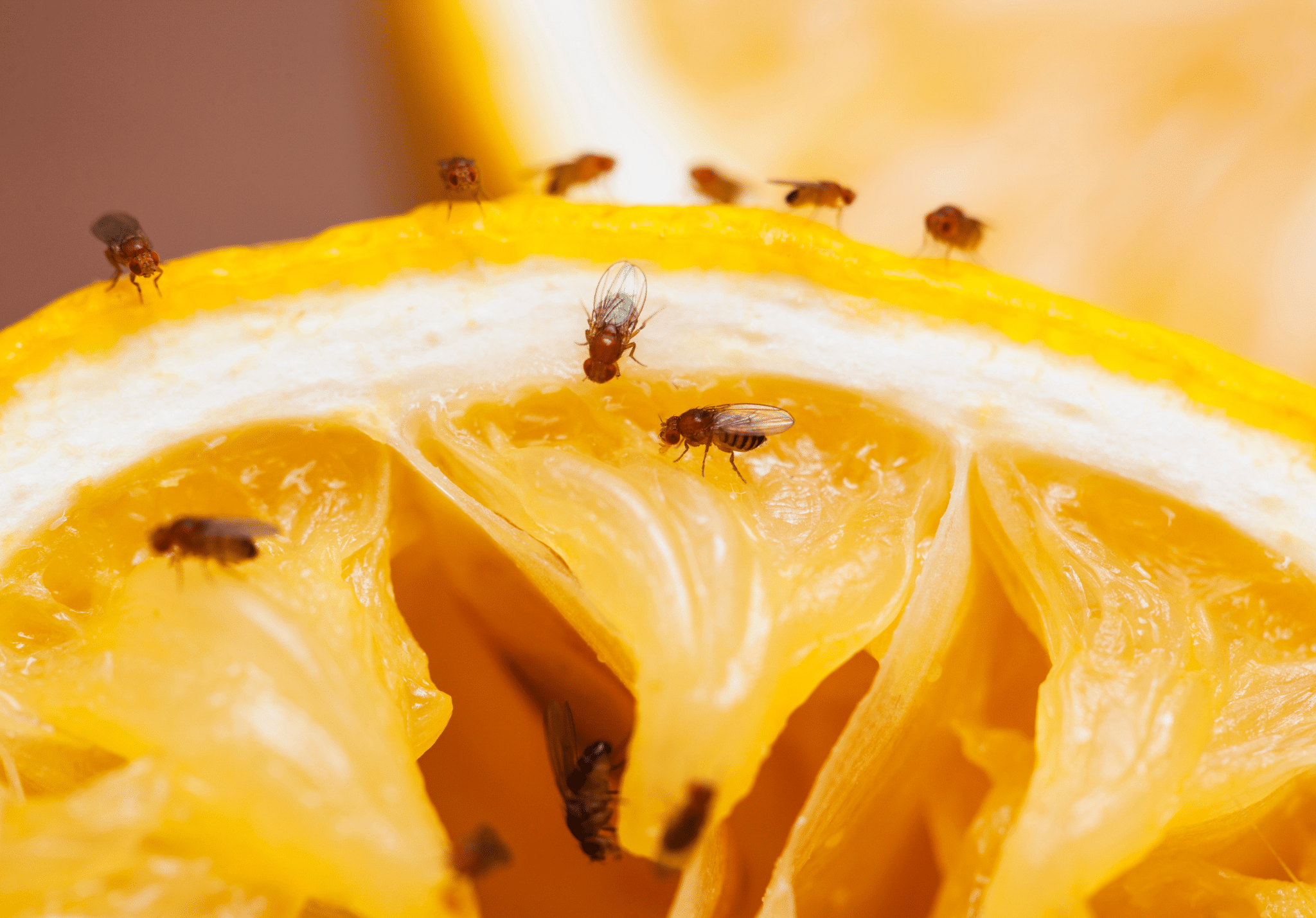
Fruit flies are tiny flies, measuring about 1/8 of an inch in size, that are pale yellow or tan in color with red eyes. They’re often found hovering around overripe or rotting produce, hence the name. They can also be found near fermented liquids, like beer, wine, cider and even vinegar (which makes the adage “you catch more flies with honey than vinegar” pretty much null and void). Female fruit flies can lay hundreds of eggs in drains, trash cans or rotting organic matter, which means an infestation can quickly grow out of hand.
Drain Flies
Drain flies are small, measuring from 1/16 to 1/4 of an inch in length. They’re dark gray, brown or black in color with fuzzy bodies. Because of their broad, wide-set wings, they have a moth-like appearance. As the name suggests, drain flies hover around sinks, showers and floor drains. The way they fly is a bit erratic, appearing more like quick hops than smooth, sustained flight. They breed in the slimy buildup in drains and pipes, with females laying anywhere from 30 to 100 eggs, making an infestation a significant concern.
Cluster Flies
Cluster flies are larger than house flies. They’re gray with golden hairs on their bodies, and they have overlapping wings. Unlike many other fly species, cluster flies move slowly, and their flight appears lazy and sluggish rather than quick and erratic. They aren’t attracted to food, garbage or decaying matter. Instead, they’re an overwintering pest that crowd in attics, wall voids or near sunny windows to keep warm. Cluster flies don’t pose health risks, and they don’t breed indoors. So they’re more of a nuisance for homeowners than anything else.
Blow Flies
Blow flies are sometimes mistaken for very large house flies. They’re metallic blue or green in color and make a loud buzzing noise when they fly. They’re attracted to decaying animals and animal waste. They lay eggs in dead animals, and forensic entomologists can actually use the stage of development to determine the time of the animals’ death. Because of their behavior when it comes to waste and dead animal matter, they carry bacteria and can contaminate surfaces and food. If you spot these flies, it’s usually a sign of another problem nearby.
If you find yourself constantly swatting at flies, no matter the species, don’t hesitate to call the Pro-Staff team. Our technicians are trained to identify the source of the infestation and apply targeted treatments to get rid of it. Call our Omaha pest control company today at (402) 819-7378 or contact us online for a free inspection.
