
When it comes to pests, few threats are as serious or costly as wood-destroying insects. These pests work quietly and often out of sight, compromising the structural integrity of your home before you even notice their presence. From termites tunneling through the foundation to carpenter bees boring into framing, each wood-destroying insect species has its own unique behaviors that present different challenges to homeowners. Understanding which insects are out there and how to spot an infestation is the most important thing you can do to protect your home. Here’s our guide to wood-destroying insects:
Termites
Termites are probably the most well-known wood-destroying insect on this list, and they’re widely considered the most destructive. They can cause thousands of dollars’ worth of damage to a person’s home. The most common species of termites are subterranean termites, which live in underground colonies and travel through mud tubes to access your home and feed on wooden structures. Termites can—and often do—go over a year without being detected.
Termites make their way into people’s homes in search of wood to feed on, but the main attractant is moisture. Signs of termite activity include discarded wings, sawdust-like droppings (frass), mud tubes, bubbling paint and hollow-sounding wood. Stuck doors and windows are another indicator of termite activity, as their behavior causes wood framing to warp and buckle.
Carpenter Ants
Commonly mistaken for termites, carpenter ants are large ants, measuring up to a half-inch long, that are black or blackish-red in color. They’re similar to termites in that they quietly destroy wooden structures, but they’re different because they don’t feed on wood. Instead, they excavate it to create smooth tunnels for their nests. They prefer damp wood that’s been softened or that’s decaying.
Signs of carpenter ants include small piles of frass near baseboards and windowframes, hollow-sounding wood and smooth exit holes. You may also see live carpenter ants. Some people say that they can hear faint rustling or crinkling sounds when they press their ear against the wall. This is another indication of carpenter ant activity.
Carpenter Bees
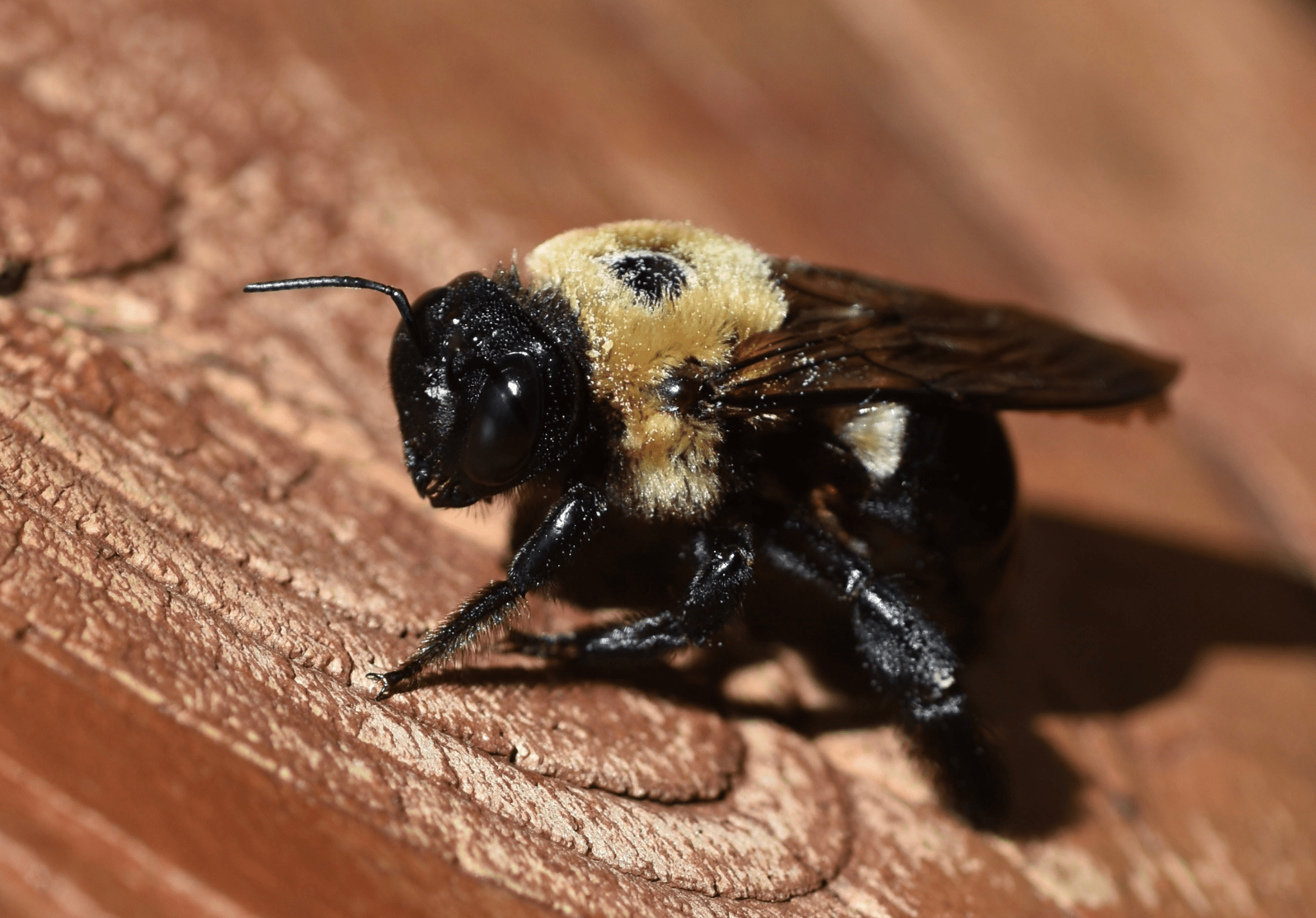
Typically spotted in spring and summer, carpenter bees often spend time hovering around wooden decks, fences, eaves, siding and window frames. Carpenter bees are commonly mistaken for bumble bees because they’re similar in size and color. The easiest way to tell the difference is that carpenter bees’ abdomens are shiny, smooth and mostly black, unlike bumble bees who have fuzzy bodies with black and yellow stripes. Also unlike bumble bees, carpenter bees are solitary creatures that prefer to be alone, instead of staying in colonies.
Like carpenter ants, carpenter bees don’t eat wood. Instead, they bore perfectly round holes measuring about a half-inch into unfinished or weathered wood to establish nesting sites for their eggs. Since they prefer wood that’s already weathered or decaying, the presence of carpenter bees usually indicates that a larger structural issue is already present. Carpenter bees also contribute to secondary pests: woodpeckers. Woodpeckers aggressively peck infested wood in search of larvae to eat, which doubles the damage.
Wood-Boring Beetles
“Wood-boring beetle” is a catch-all term for a few different species of beetles, like the powderpost beetle and the deathwatch beetle. Wood-boring beetles’ larvae, or woodworms, cause damage by tunneling through and feeding on wood from the inside out. This can take place over the course of a few years before they’re detected. While each species of wood-boring beetle prefers various wood types and moisture conditions, they share a couple of things in common: the damage they cause and the signs of their presence.
Signs of wood-boring beetles include small, round exit holes in wood surfaces accompanied by fine, powdery frass, which is the result of larvae working their way through the wood over months or even years. Because wood-boring beetle infestations can develop quietly over a long period of time, they’re often discovered during renovations or home inspections.
What to Do About Wood-Destroying Insects
If you run into any of these wood-destroying insects, contacting a professional pest control company, like Pro-Staff, is the best way to protect your home from further damage. Not only do we remove existing infestations, but we also use expert exclusion techniques to ensure they don’t return. For home buyers, sellers and lenders that need a professional real estate assessment before closing, we also offer WDI inspections with all of the necessary paperwork to ensure a smooth transaction. Contact the pros at Pro-Staff today for help with wood-destroying insects.